
Airport & FBO Guides
Private jet airports and FBOs: how they work for passengers
Private jet airports work differently from the airline terminals most of us know. You arrive at a small private terminal, meet your crew and walk or drive to the aircraft, often within minutes. However, the airfield you pick still shapes your whole day, from the drive in to the time you can leave.
This guide explains how private jet airports and their terminals work for passengers. Below it, you will find one guide per airport, each with the local rules, the terminals on the field and the jets that suit it.
What an FBO is
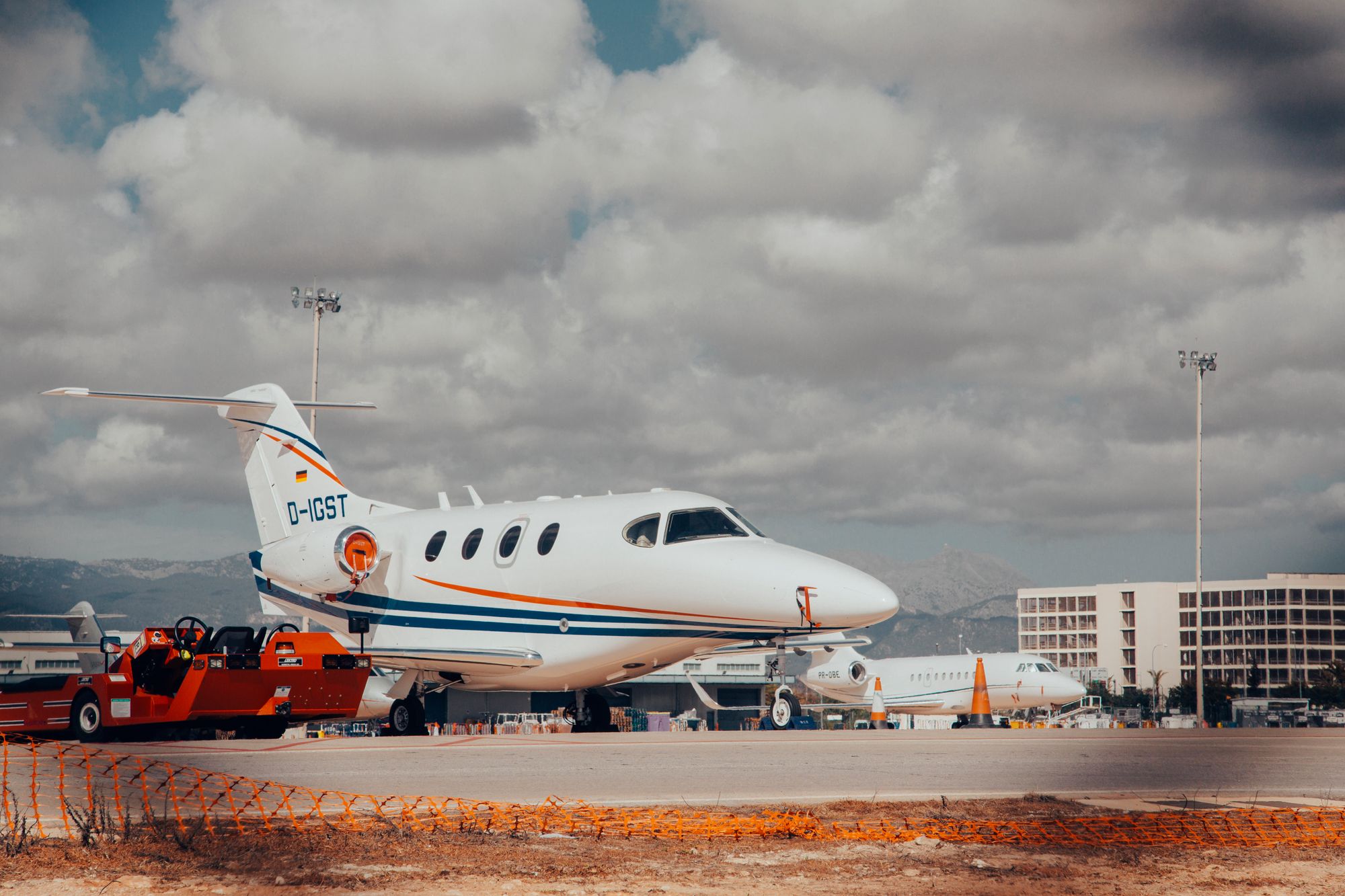
An FBO, short for fixed-base operator, is the private terminal and ground team that looks after a business jet and its passengers. It has a lounge, meeting rooms and a ramp team that parks, fuels and loads the aircraft. The FBO staff usually arrange customs, security screening and the car that meets you.
Many airports have several FBOs side by side, while some run a single terminal themselves. Either way, the operator of your flight books the FBO before departure. Our article on what an FBO actually does goes into more detail.
Customs and immigration
On an international flight you still clear passport control and customs. The difference is where and how fast. At most large private jet airports, officers work inside or next to the FBO, so the check takes a few minutes in a quiet room.
The paperwork starts earlier. The operator sends passenger names and passport details ahead of the flight, and some countries ask for this a day in advance. So, send your passenger list with your booking, not on the morning of departure.
Arriving and departing
On departure, you are dropped at the FBO, usually 15 to 30 minutes before the planned time. Your bags go to the ramp team, you clear security and passport control, and then you board. Some airports let your car drive to the aircraft steps, while others use an FBO minibus.
On arrival, the process runs the other way. The aircraft parks on the FBO apron, officers check passports, and your car waits at the terminal door. As a result, you are often on the road within minutes of the engines stopping, although this depends on the airport and the officers on duty.
Slots, permissions and peak days
Busy airports control their traffic. Some require an airport slot, which is a booked time for landing or take-off. Others ask for prior permission, often shortened to PPR, before a flight can even file its flight plan. Then there are night rules, which can stop departures or arrivals after a certain hour.
These limits matter most on peak days. Big events such as the Monaco Grand Prix, an air show or a February ski weekend can fill the slots days ahead. If your dates sit on a peak, ask for the slot at the same time as the aircraft.
Choosing between private jet airports
The closest airport is not always the best one. A smaller airfield may be nearer your hotel, yet its runway can rule out larger jets or close early in the evening. Equally, a big hub may be easy to reach but limit business aviation at airline peak hours.
When we compare private jet airports for a trip, we look at four things. First, the drive time to where you are going. Second, the opening hours and night rules against your timings. Third, the runway and parking for the jet you need, and how busy the field will be on your dates.
Our airport guides
Each guide covers which airfield to use and why, how long the drive takes, how the passenger flow works, the operating rules in plain words, the terminals on the field, the jets that suit it and the questions we hear most.
- Paris Le Bourget, the main business aviation airport for Paris.
- London Farnborough, with a short comparison of Luton, Biggin Hill and Northolt.
- Dubai, covering Al Maktoum International (DWC) and the private options at Dubai International (DXB).
- Geneva, the main gateway to the Alps in winter.
- Nice Côte d’Azur, for Monaco, Cannes and the Riviera.
Popular routes between these airports include London to Paris, Paris to Nice, London to Nice, Dubai to London and Dubai to Paris. If you are flexible on dates, our empty leg flights page lists one-way repositioning flights that can cost less.
A note on the pilot’s tips
Each guide ends with a short pilot’s note. These come from Julien, who flies the Airbus A350 for an airline and flew the A380 before that. They are general points about flying and airport operations, not instructions for any particular business jet.
Frequently asked questions
What is the difference between an FBO and an airport terminal?
An FBO is a private terminal for business aviation. It has its own lounge, security, ramp team and often customs officers, so you skip the queues of the main airline terminal.
How early should I arrive for a private jet?
Most passengers arrive 15 to 30 minutes before departure. The exact time depends on the airport, the security process and whether customs is involved, so we confirm it with your trip details.
Do I need my passport on a private jet?
Yes, on any international flight. The operator sends your passport details in advance, and officers check them at the FBO on departure and arrival.
What is an airport slot?
A slot is a booked time to land or take off at a busy airport. At coordinated airports a flight cannot operate without one, so we request it together with the aircraft.
Why not always fly to the closest airport?
A closer airfield may have a short runway, early closing time or tight parking. We compare drive time, opening hours and runway limits for your jet before we suggest one.
Plan your flight
To plan your trip, send us your dates, passenger count, luggage and where you are going. We compare options from vetted operators and come back with a firm quote.
Contact us 24/7
France: +33 6 63 39 37 93
[email protected]
Menkor arranges flights with licensed operators. The operator confirms the final airport, slot, routing and availability at booking.