
AVIATION NEWS · SEPTEMBER 2026
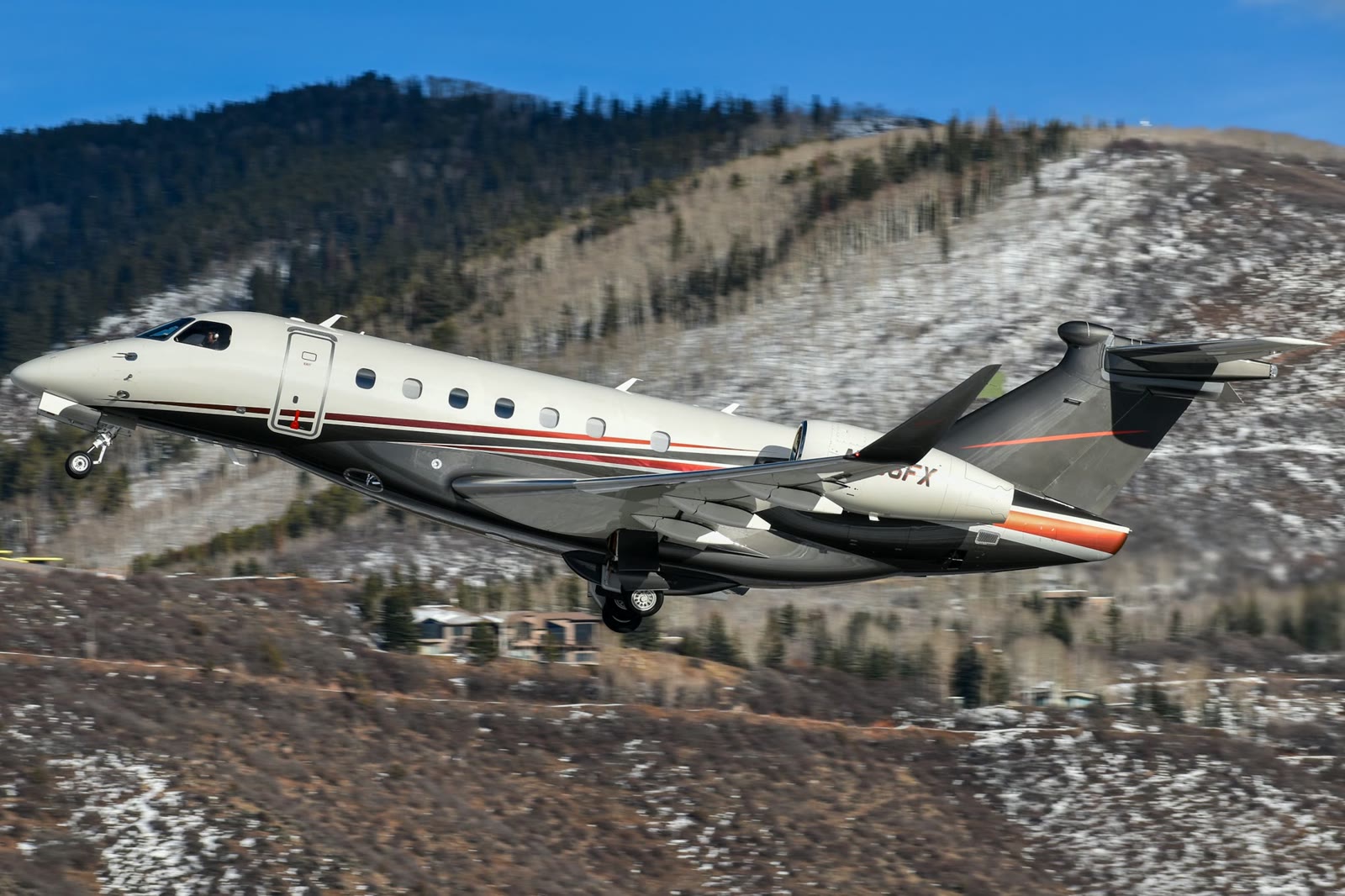
On 18 September 2026, Embraer delivered the first Praetor 600E to Flexjet, making the Brazilian manufacturer’s refreshed super-midsize jet the newest business aircraft to enter customer service in the private-aviation market. For international travelers who rely on charter and fractional access—rather than waiting years for a factory slot—the milestone matters more than a concept reveal. A named model with verified performance, a cabin innovation already certified, and early fleet deliveries underway changes what clients can request on transatlantic and intercontinental missions.
The Praetor 600E is the successor evolution of Embraer’s Praetor 600 line, unveiled with the Praetor 500E on 24 February 2026. It sits firmly in the commercial business-jet category: twin-engine, cabin-class, designed for executives and private groups rather than airline or military fleets. That positioning makes it especially relevant for charter planners comparing midsize economics with true long-haul capability.
Why the Praetor 600E Qualifies as “Newest” Right Now
Aviation news cycles often blur announcements, first flights, and actual deliveries. The Praetor 600E clears a practical bar: it is no longer only a brochure product. Flexjet, named exclusive fleet launch customer, took the first aircraft in September 2026 and expects a dozen Praetor 600Es by year-end, as part of a larger firm order package with Embraer announced in February 2025.
That delivery timing places the 600E ahead of several high-profile programs that are still in flight test or earlier phases of roll-out. For charter and ownership clients, “newest” is most useful when it means aircraft that can appear on a trip proposal—not only on a trade-show stage.
Mission Profile: Super-Midsize Built for Intercontinental Legs
Embraer markets the Praetor 600E as a super-midsize jet with best-in-class range in its segment. Published performance from Embraer’s Praetor 600E materials includes:
- Range: 4,018 nautical miles (7,441 km) with four passengers, under NBAA IFR reserves with a 200 nm alternate
- High-speed cruise: 466 knots (863 km/h)
- Maximum operating Mach (MMO): Mach 0.83
- Maximum operating altitude: 45,000 feet (13,716 m)
- Engines: two Honeywell HTF7500E turbofans, each rated at 7,528 lbf thrust
- Seating: two crew plus eight passengers in a typical layout, up to 12 maximum
- Takeoff distance: 4,717 feet (1,438 m) at maximum takeoff weight, sea level, ISA
Embraer highlights city pairs such as London–New York as consistent nonstops for the type—an operational claim that directly affects how charter brokers structure eastbound and westbound Atlantic itineraries when runway length, payload, and seasonal winds are factored in. Shorter field performance relative to many large-cabin jets also supports access to secondary airports closer to final destinations, a frequent priority for private travelers.
Cabin altitude is published at 5,800 feet while cruising at 45,000 feet, which is among the comfort metrics charter passengers increasingly ask about on longer sectors.
The Smart Window: Cabin Technology That Redefines the Sidewall
The headline differentiator of the Praetor 600E is Embraer’s Smart Window. Flexjet describes the first delivered aircraft as the world’s first certified jet with a fully operational Smart Window: a curved 42-inch 4K OLED touchscreen integrated into the cabin sidewall.
In practice, the display can:
- Show live exterior views from three external cameras, functioning as a digital “window”
- Support video conferencing and collaborative meetings around a divan and adjacent seats
- Serve as a large entertainment screen for cinema or gaming with cabin audio
Because the screen is built into the sidewall rather than mounted on a credenza, the seating area stays open—useful on charter flights where groups switch between work, dining, and rest. Flexjet has also stated that its Praetor 600Es will carry Starlink Wi-Fi, pairing connectivity with the Smart Window’s meeting and streaming roles.
Beyond the display, Embraer’s materials emphasize a next-generation cabin management system, redesigned seats with electric-assisted movement and simplified berthing, expanded headroom at seating positions, and optional voice-command features. Exact optional equipment can vary by operator and completion; charter clients should confirm the fitted specification on any specific tail number.
Fly-by-Wire Comfort and Flight-Deck Continuity
The Praetor family has long been associated with full fly-by-wire controls in the midsize and super-midsize classes. Embraer positions the 600E as retaining full fly-by-wire with active turbulence reduction—technology that aims to smooth the ride and reduce pilot workload, especially in weather. The flight deck uses Collins Aerospace Pro Line Fusion avionics, with additional safety and awareness tools Embraer lists on the type, including enhanced vision / head-up display options and runway overrun awareness systems where equipped.
For passengers, the practical takeaway is ride quality and access: fly-by-wire handling and strong runway numbers help operators consider airports that larger ultra-long-range jets may avoid. For operators and charter departments, commonality with prior Praetor and Phenom fleets can simplify training and support—Flexjet’s long Embraer relationship is one example of that continuity.
How Charter Clients Should Think About the 600E
Not every traveler needs an ultra-long-range flagship. Many international missions sit in a sweet spot: eight passengers or fewer, a need for nonstop or one-stop flexibility, and a preference for modern cabin tech without the cost structure of the largest globals.
The Praetor 600E targets that space. Early fleet concentration with a major fractional operator means availability will initially be shaped by ownership and interchange programs more than by open charter alone. Still, as additional E-series aircraft enter service through late 2026 and beyond, brokers and charter operators serving Europe, the Middle East, and the Americas should expect growing client awareness—and more requests by name.
When evaluating a Praetor 600E for a trip, ask for:
- Confirmed range assumptions for your passenger and baggage load
- Whether Smart Window and high-speed connectivity are installed on that aircraft
- Cabin layout (divan vs. double-club) and berthing capacity for overnight sectors
- Airport performance for your preferred departure and arrival fields
Those details matter more than brochure maximums when winds, runway length, or a full cabin change the flight plan.
Looking Ahead: A New Benchmark in the Super-Midsize Class
The Praetor 600E’s September 2026 entry into customer hands closes the gap between announcement and experience. Embraer’s February unveil framed the E-series as a cabin and systems evolution of a proven platform; Flexjet’s first delivery proves the product is flying with paying customers.
For the private-aviation market—and for travelers who charter rather than purchase—the message is straightforward: the newest super-midsize jet is already reshaping what “connected, intercontinental, mid-cabin” can feel like. As fleets grow, informed clients will compare the 600E not only with other super-midsizes, but with larger jets on missions where range, runway access, and cabin technology decide the booking.
If you are planning an upcoming international itinerary and want to know whether a super-midsize like the Praetor 600E fits your route, passenger count, and schedule, a Menkor Aviation charter advisor can match aircraft performance to your real city pairs—without overselling capacity you do not need.